

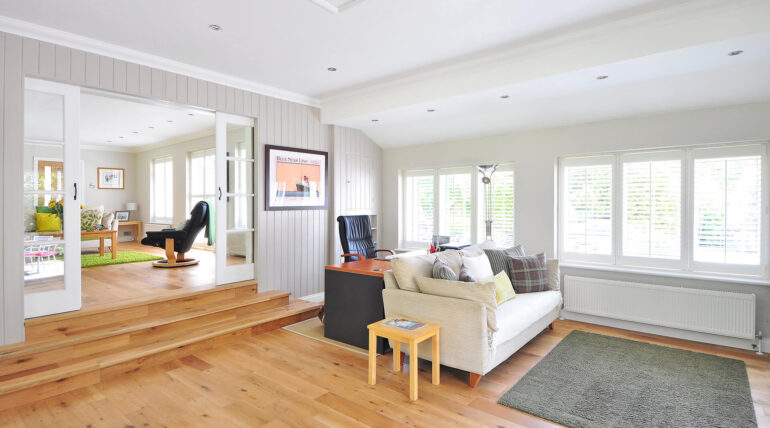
Stand in front of the racks and solid hardwood, engineered hardwood and laminate can look much the same. What separates them is what is underneath the surface.
Solid hardwood
One piece of timber, the same wood all the way through. Because there is no veneer to wear through, it can be sanded back and refinished several times, which is why solid floors survive decades.
The trade-off is movement. Solid timber takes on and gives up moisture with the seasons, so it expands and contracts. That is why it is normally laid above grade over a timber subfloor, and why it is a poor choice for a basement or directly over a slab.
Engineered hardwood
A real hardwood wear layer bonded to a cross-laid plywood core. The surface is the same timber you would get on a solid board; the core is what changes the behaviour. Cross-laying makes the board far more stable across humidity swings, so it copes with concrete slabs and below-grade rooms.
How many times it can be refinished comes down to the thickness of that wear layer. A thick wear layer can be sanded more than once; a thin one cannot be sanded at all. Ask to see the spec before you decide, because the two look identical from above.
Laminate
Not timber at all. A photographic decor layer is pressed onto a high-density fibreboard core under a clear melamine wear coat. Modern printing is good enough that the look is convincing, and the wear coat resists scratching and fading better than a finished timber surface.
It cannot be sanded back, and the fibreboard core swells if water sits on it. Water-resistant laminates exist and are worth the premium in a kitchen, but a fully waterproof core means vinyl, not laminate.
Which one
If you want a floor that can be renewed decades from now and the room is above grade, solid. If you want timber over concrete or in a basement, engineered. If the budget is the binding constraint and the room is dry, laminate. Come and handle all three — the difference is easier to feel than to read about.